As of press time, Amazon is still matching some prices on the now-expired Barnes & Noble 50% off Criterion Collection sale, including the following Wes films:
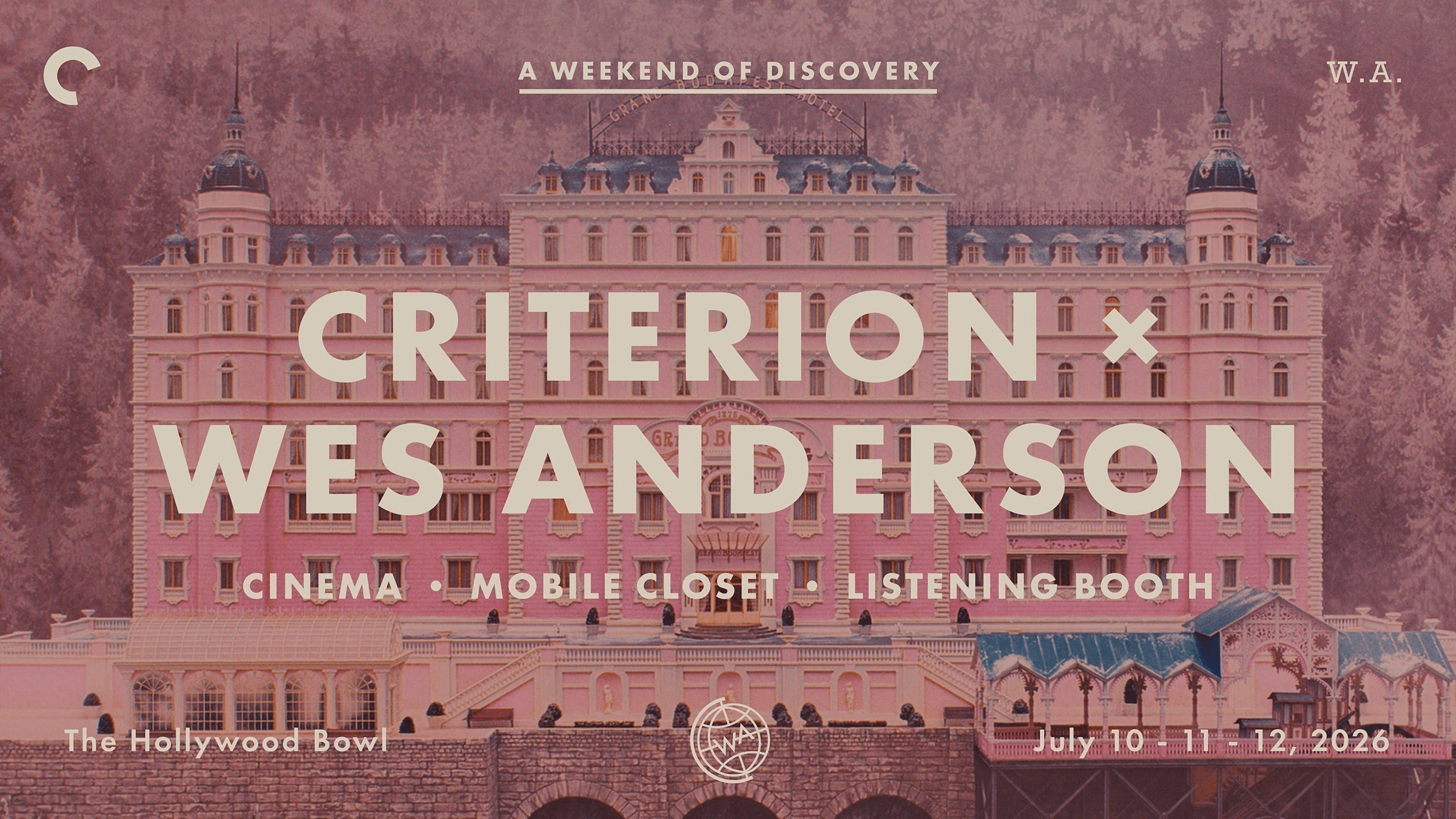
“The Criterion Mobile Closet is returning to Los Angeles! This July 10-12, Criterion will transform the Hollywood Bowl’s Music from the Films of Wes Anderson concert into our largest public event yet, stepping into the director’s creative universe for a weekend celebrating film, sound, and discovery.
Alongside the Mobile Closet, we’re launching a one-weekend-only Criterion Cinema, offering fans screenings curated by Anderson, special merch, and space to unwind and get inspired! This experience will be open to everyone. You do not need a concert ticket to enter the Mobile Closet lottery or the Criterion Cinema.
[We are] pleased to announce The House on Utopia Parkway: Joseph Cornell’s Studio Re-Created by Wes Anderson, an exhibition conceived by curator Jasper Sharp and the acclaimed American filmmaker. Opening December 16, 2025, it brings the artist’s New York studio to the heart of Paris, transforming the storefront gallery at 9 rue de Castiglione into a meticulously staged tableau—part time capsule, part life-size shadow box—for the first solo presentation of Cornell’s work in Paris in more than four decades…
It is this world that Anderson and several of his longtime collaborators, together with exhibition designer Cécile Degos, now bring to life in Paris through more than three hundred objects and curiosities from Cornell’s own collection. Within this evocative setting, several examples of the artist’s shadow boxes—poetic reliquaries of memory and imagination—are on view, including Pharmacy (1943), which was once owned by Teeny and Marcel Duchamp and is modeled after an antique apothecary cabinet. Untitled (Pinturicchio Boy) (c. 1950), an iconic work from Cornell’s celebrated Medici series, frames multiple reproductions of Bernardino Pinturicchio’s Portrait of a Boy (c. 1480–82) behind amber-tinted glass, juxtaposing them with guidebook maps of Italian streets and wooden toys. A Dressing Room for Gille (1939) pays homage to Jean-Antoine Watteau’s Pierrot (1718–19), also known as Gilles, in the collection of Musée du Louvre, a short walk from the gallery. And Blériot II (c. 1956) honors Louis Blériot, the French inventor who was the first person to make an engine-powered flight across the English Channel. Alongside these works are loans from the Joseph Cornell Study Center at the Smithsonian American Art Museum in Washington, DC, including a number of unfinished boxes by the artist that provide a rare glimpse into his process.
Where: 9 rue de Castiglione 75001 Paris When: December 16, 2025–March 14, 2026
Among the few possessions he left to his heirs was a set of Encyclopedia Britannica in storage at the Lindbergh Palace Hotel under the names Ari and Uzi Tenenbaum.
In November, art and memorabilia from the collection of Gene Hackman (1930-2025) were auctioned by Bonhams in New York and Los Angeles.